
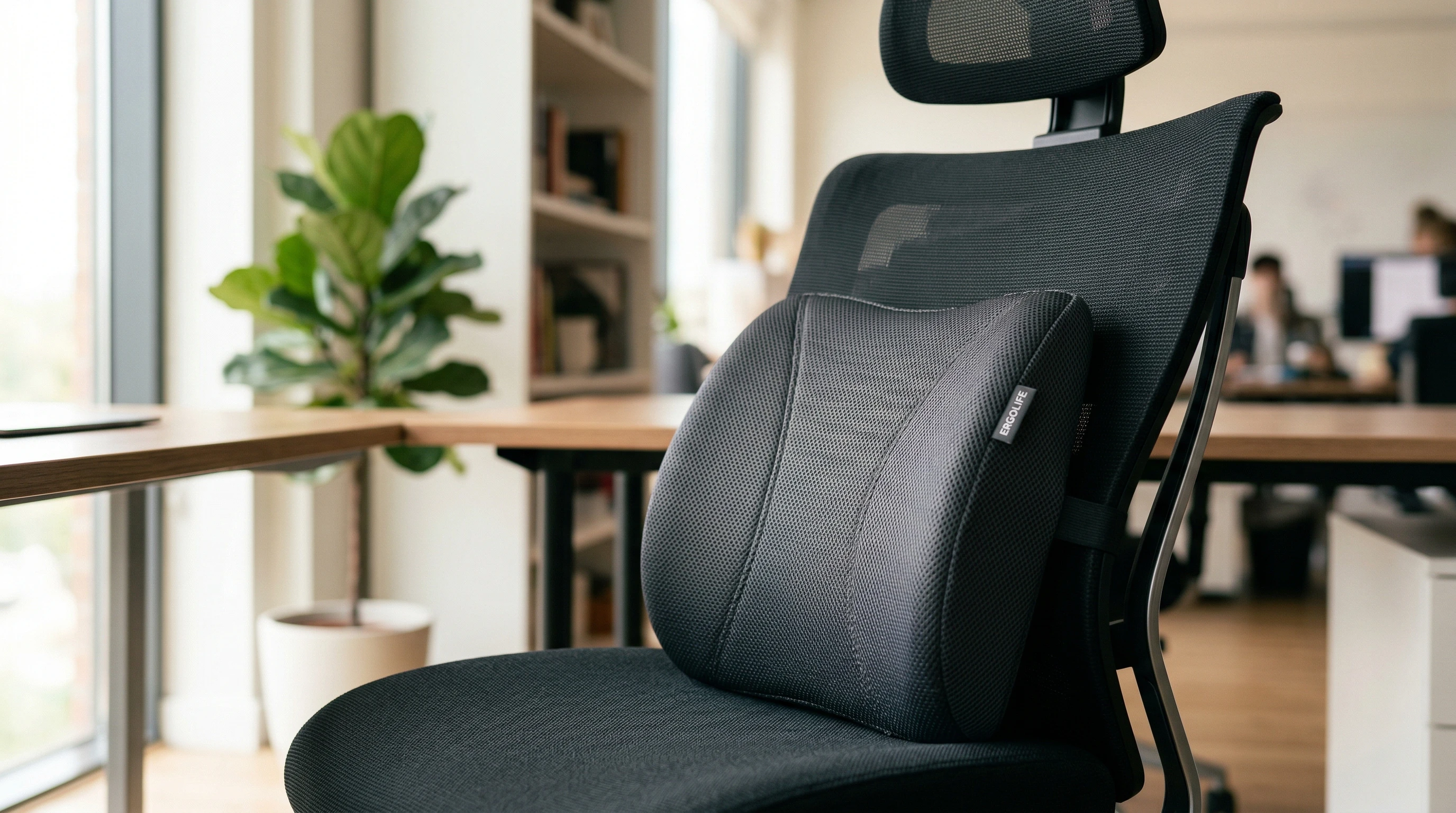
 Sitting for hours at your desk can do a number on your back, and if you’re like me, you’ve definitely felt that nagging lower back ache after a long day. A good lumbar support cushion for your office chair can make a real difference, supporting that natural curve in your spine and helping you finish the day feeling a whole lot better.
You’re not alone if your back gets cranky in your office chair. A little lumbar support brings comfort, encourages better posture, and can even stop bigger back problems from creeping up on you.
Check out these top picks for lumbar support cushions, plus a bunch of practical advice to help you choose the right one for your setup.
1. Everlasting Comfort Lumbar Support Pillow
The Everlasting Comfort Lumbar Support Pillow is a popular foam cushion that fits most office chairs and car seats. With a contoured shape and adjustable straps, it’s designed to follow the curve of your lower back.Pros:
- Memory foam stays comfy and bounces back after long use.
- Adjustable straps help it stay put on different chairs.
- Breathable mesh cover means it doesn’t get too hot.
- Cons:
- Can feel bulky on smaller chairs.
- May be too thick for some users who prefer a subtle cushion.
2. LOVEHOME Memory Foam Lumbar Support Back Cushion
This compact cushion uses high density memory foam to give your spine gentle but sturdy support. I like how it comes with a removable mesh cover, which is super handy for cleaning!Pros:
- Fits well on almost any standard office chair.
- Double adjustable straps help keep it from sliding around.
- Removable, washable cover is convenient for regular use.
- Cons:
- Not as effective for extralarge chairs.
- Some users say it loses firmness after a few months.
3. Samsonite Ergonomic Lumbar Support Pillow
The Samsonite lumbar cushion is a little slimmer, which works great if you want something more subtle. The curve is designed to match up well with most lumbar curves, so it strikes a nice balance between support and not feeling too big.Pros:
- Takes up less space, so it won’t push you off the edge of your seat.
- Memory foam feels soft but still holds its shape after long days at the desk.
- Cool mesh fabric cover is comfortable even in warmer weather.
- Cons:
- One strap instead of two means it can shift position occasionally.
- Might not give enough support if you’re looking for something more structured.
4. SOFTaCARE Seat Cushion & Lumbar Support Pillow Set
If you’re after a combo pack, SOFTaCARE’s set comes with both a lumbar support pillow and a seat cushion. I find the setup pretty handy when you want allover comfort for long sitting stretches.Pros:
- Twoinone means you get lower back and seat support.
- Gel and memory foam construction keeps you cool during the day.
- Great for chairs without any builtin support.
- Cons:
- Takes up a bit of space, especially in smaller offices.
- The lumbar pillow by itself might be thicker than some prefer.
5. Qutool Lumbar Support Pillow for Office Chair
The Qutool cushion stands out for its larger size and firmer support, which is super helpful for anyone who’s struggled with lower back pain from long workdays.Pros:
- Wide, thick design works even for taller users.
- Firm memory foam gives real support without flattening fast.
- Extra extension straps for oddshaped or oversized chairs.
- Cons:
- Might be too big if you have a small frame.
- Thickness can take some getting used to at first.
Why Lumbar Support Really Matters
Lumbar support cushions aren’t just about comfort; they really help with posture and back health. Sitting for hours without the right support can flatten the curve in your lower spine.
Over time, this puts stress on your discs and muscles, often leading to aching or even more serious pain. I’ve found that a good cushion encourages me to sit a little straighter, reducing that end of day fatigue. It’s also much easier to focus when you aren’t distracted by back discomfort.
When I first switched to using a lumbar support cushion, I was surprised by how quickly my back started feeling better. Even after a few weeks, the difference in posture and my overall comfort level was noticeable.
If you add regular standing or walking breaks to your day and use a quality support cushion, you’ll likely notice those nagging backaches becoming a thing of the past. Remember, prevention is your best friend when it comes to back health!
Buying Guide: What To Look For In A Lumbar Support Cushion
Material
Memory foam is really popular with these cushions because it molds to your back, but still offers plenty of support. Some add gel layers or mesh covers to keep things cool. Double check if the cushion feels supportive, not just soft.
While foam is a top choice, some folks appreciate cushions with a touch of gel, since they provide a cooler feel during long work sessions. If you’re someone who overheats, mesh covers or ventilated foam are worth considering, too.
Fit and Size
Make sure the cushion matches your chair and body size. Some are bulkier but offer more support, while others are slim and more discreet. If your chair is on the larger side, you’ll want a cushion that’s wide enough not to slide around. On the other hand, a more compact cushion may suit smaller chairs and users better.
Straps and Adjustability
Look for adjustable straps or anti slip features. Straps that are too loose or don’t fit your chair make the cushion tough to use all day. Some cushions come with longer straps or even extenders for extra large chairs or uniquely shaped seats.
Cover and Cleaning
Removable and washable covers save hassle in the long run. Covers that breathe, like mesh, mean you’re less likely to get sweaty after hours of sitting. Some covers are also made with antibacterial fabric, which is a nice bonus if you want minimal fuss.
Shape and Support
The best cushions follow the natural curve of your lower spine. Try to find options with contoured surfaces or adjustable shapes. If you have a history of back pain, a firmer, larger cushion is worth a try. For extra versatility, try looking for cushions that come in multiple sizes so you can track down the one that matches your needs best.
If you’re particularly concerned about back comfort, you might want to look at cushions designed for orthopedic use. These tend to provide targeted support and work well for people who sit for extended periods each day.
Adding a seat cushion along with your lumbar pillow can make your whole sitting experience more balanced and relieve pressure from your hips, too.
Frequently Asked Questions
Do lumbar support cushions really help with back pain?
I’ve found they do help, especially for folks dealing with the early signs of lower back discomfort or jobs that require lots of sitting. They aren’t a fix for serious back issues, but using one along with regular movement and stretches is a solid way to ease strain on your back.
Can I use a lumbar cushion in any chair?
Most cushions are made with adjustable straps so they fit everything from basic office chairs to gaming chairs or even car seats. Some of the bigger or more structured ones suit wider seats better.
How do I know if my cushion is the right size?
You want the cushion to fit snugly against your lower back without pushing you forward. Too thick and you’ll feel awkward at your desk; too thin and it won’t give much support. Ideally, the cushion should support your lower spine and feel comfortable for hours at a time.
How do I clean a lumbar cushion?
Most have removable covers you can throw in the wash. For the foam or gel core, spot cleaning with mild soap usually does the job. Always check the care instructions though – some materials need extra care.
Should I use a lumbar support cushion all day?
It’s totally fine for allday use as long as it’s comfortable. Take breaks to stand up and move around, since no cushion replaces the benefits of stretching and changing positions during your workday.
For best results, try pairing your lumbar support with occasional core stretches or posture exercises. Over time, using a cushion as part of your daily office routine can help you feel more energized and keep aches to a minimum.
Final Thoughts
Finding the right lumbar support cushion for your office chair can change the way you feel after a full day at your desk. Every pick here covers a different style and budget, so there’s something that can work for pretty much any setup.
A small upgrade like this can give a boost to your comfort, help you move through your day a little easier, and keep back pain from becoming a bigger problem.
Got a favorite lumbar cushion or a question about using one at work? I’m always happy to share more tips based on what’s worked for me and others working from home or the office.
If you’ve tried a cushion not listed here and want to share your experience or advice, feel free to drop a comment. The more tips we can spread, the better for everyone’s back health!
Thanks for stopping by and have a great day!