
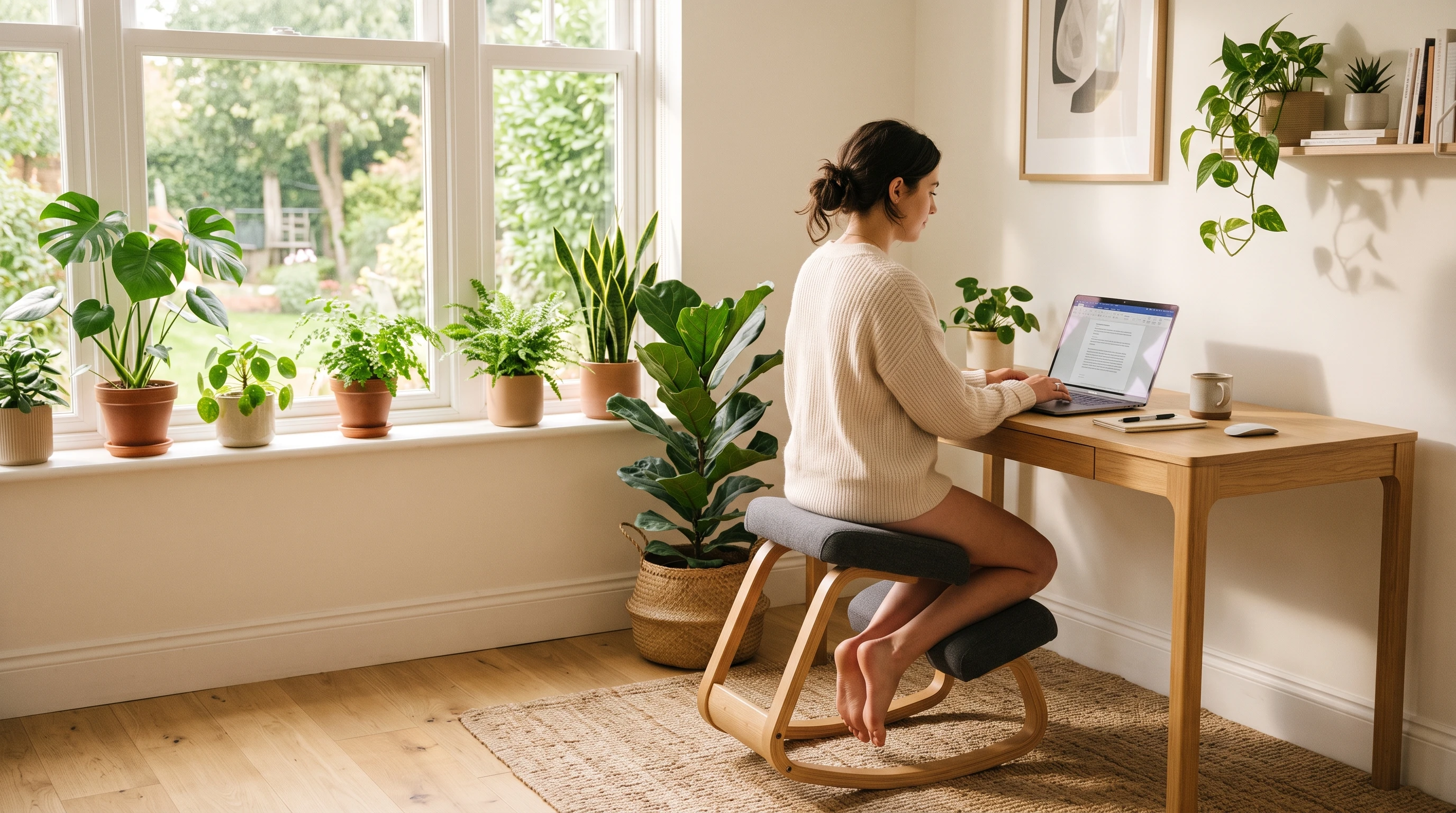
 Sitting for long periods at a desk can be tough on my back, hips, and neck. After a few hours, I tend to feel stiff and unfocused. Using a kneeling chair is one way I found to support a better posture while working.
Switching to an ergonomic kneeling chair feels strange at first, but I noticed it encourages me to keep my back straighter and distribute my weight differently. My core feels more engaged, and I end up moving a bit more during the day.
Over time, I realized that using a kneeling chair, even for a few hours, not only activates core muscles but also brings some relief to my lower back, which is a welcome change from standard office chairs.
This article explains the top ergonomic kneeling chairs I’ve tested or researched, the benefits they offer, how to use one correctly, how to pick the best kneeling chair, and common questions I hear from others who are curious about making the switch.
I’ve tossed in a few extra tips and things I’ve learned along the way to help you make the best choice for your workspace and comfort.
Best 5 Ergonomic Kneeling Chairs
Varier Variable Balans Kneeling Chair
This is one of the most recognizable kneeling chairs, with its curved wood base that allows gentle rocking.
I tried the Varier Variable Balans and enjoyed how easy it was to shift positions. The padding feels firm but comfortable, and the design helps keep my spine neutral. The shape encourages active sitting throughout the workday.
- Pros: Iconic design, promotes active sitting, high quality materials, easy to assemble. It’s a good pick for those looking for an eye-catching chair that makes sitting less static.
- Cons: No backrest, doesn’t adjust for height, higher price point. Adjusting for multiple users can be tricky due to its fixed size.
Dragonn Ergonomic Kneeling Chair
The Dragonn is a popular kneeling chair with a supportive frame and thick foam cushions. I appreciate the adjustable seat height, which makes it fit different desks.
The swivel feature lets me move around easily, and it supports a range of body types. It’s also sturdy and can support heavier weight compared to some wood-based models.
- Pros: Adjustable height, strong frame, easy to roll around, thick cushions. The seat works well for people of various shapes and sizes.
- Cons: Doesn’t rock, takes up more floor space, some users report squeaky wheels. It’s important to check the wheels regularly for wear and tear.
Flash Furniture Mobile Kneeling Chair
The Flash Furniture kneeling chair has a metal frame with memory foam cushions. I like that it comes on casters and can be adjusted for height. It’s fairly basic in design, but I find it comfortable for shorter work sessions.
Its lightweight frame makes it easy to shift from place to place if you need flexible workspace options.
- Pros: Budget friendly, height adjustable, memory foam padding, easy to move. It’s nice for people trying a kneeling chair for the first time.
- Cons: Not ideal for very tall users, padding may flatten over time, limited color options. If style or long-term durability matter a lot, keep this in mind.
Sleekform Ergonomic Kneeling Chair
Sleekform offers a thickly padded kneeling chair with a larger seat area. After trying it, I found it supportive for my shins and knees, and wide enough for shifting positions.
Its wooden rocking base keeps me gently active even when sitting for a while. The wider base is also helpful for those with longer legs who want more room.
- Pros: Generous padding, rocking motion, supports posture changes, sturdy construction. The slightly wider seat makes it versatile for different body types.
- Cons: Not height adjustable, wooden runners require careful placement on hard floors, may be bulky under smaller desks.
Office Star Ergonomically Designed Knee Chair
This Office Star model is a wheeled kneeling chair with memory foam cushions and a straightforward metal frame.
It’s simple to set up and works well if you just want a functional, moderately priced kneeling chair to try out. The tilt-adjustment feature makes it easy to get more comfortable quickly.
- Pros: Affordable, easy to assemble, adjustable seat angle and height. It’s great for beginners who want to test the benefits without a huge investment.
- Cons: No rocking feature, seat is narrower than some models, basic design. You might want more space if you have broader hips or simply like a larger seat.
Benefits of Using a Kneeling Chair
Kneeling chairs work by changing the angle of my hips, which helps reduce slouching.
By spreading my weight between the seat and knees, I find my core muscles have to work a bit, which helps fight fatigue. After using one for a few days, I noticed less lower back pain and more energy through the afternoon.
Sitting more upright encourages me not to hunch over the keyboard or desk, which is often a problem with standard chairs.
Some of the other benefits include more open hip joints, a straighter spine, and less pressure on my tailbone.
Over time, sitting in a kneeling chair encourages me to take more breaks to stand and move, which is really important for overall comfort and health.
For many people, this little change—standing up every hour or so—can bring better focus and fewer aches.
Another thing I’ve noticed: when shifting to a kneeling chair, I became more mindful of my posture throughout the day, even when I returned to my regular chair.
This subtle habit seemed to “stick,” giving me longer-term benefits from just trying a new seating arrangement.
How to Choose the Right Kneeling Chair
Key Features to Look For
- Adjustability: I look for adjustable seat height or tilt so I can get comfortable at my desk. If multiple people will use the chair, this is even more important for ensuring a good fit for everyone in the household or office.
- Padding: Thick and firm cushions make a big difference for knees and shins. Memory foam or dense foam lasts longer and feels better.
- Base Style: I choose between a rocking base for more movement or a wheeled base for mobility, depending on my workspace. Some people prefer the freedom of movement from wheels, while others like the gentle activity from a rocking base.
- Build Quality: A solid, well built frame supports more weight and lasts longer. Metal frames are sturdier but can be heavier to move. Wooden frames often look eye-catching and have a unique feel but may need more care on hard floors.
- Size: The chair needs to fit under my desk and leave enough room for my legs. Some models are better for tall or short users. Measure your available space (including height under the desk) before choosing.
What Else Matters
Comfort matters most to me. No chair will work well if I can’t sit comfortably for hours. Reviews and return policies are worth checking, especially if I’m buying online.
I also consider how easy the chair is to assemble and whether customer service is responsive in case I have issues. Sometimes, the warranty or customer support makes a big difference, especially if replacement parts are ever needed.
Some people have also found helpful accessories for their kneeling chairs such as extra padding, floor mats, or slipcovers.
These little add-ons can make a chair more comfortable and help it last longer, particularly on hard or uneven floors.
How to Set Up and Use a Kneeling Chair Properly
Adjusting a kneeling chair to fit my body is simple but really important. First, I set the seat so my hips are slightly higher than my knees.
My shins should rest gently on the pads, but without too much pressure. I keep my back straight and shoulders relaxed.
My feet don’t always touch the floor, which is normal for these chairs and doesn’t mean you’re using it wrong.
I don’t use a kneeling chair all day at first. Instead, I alternate between my regular chair and the kneeling chair.
This gives my body time to adjust and helps avoid sore muscles. I find standing up, stretching, or walking every hour keeps me comfortable and focused.
Over time, I can gradually add more kneeling chair sessions into my day until I find the balance that works for me.
Some people recommend using a kneeling chair for 30 to 60 minutes at a time at first, then increasing the interval as your body adjusts.
Listen to your body and never push through discomfort. A small footrest or cushion can help if shins get sore.
Most Useful Features in a Kneeling Chair
Height and Angle Adjustment: Being able to tweak the seat makes it fit more workspaces and body types. It’s perfect if multiple people are sharing one chair.
Rocking Base: This lets me shift positions and stay active, which feels better for long stretches. Gentle rocking encourages micro movements that help with focus and back health.
Sturdy Casters: I can slide closer to my desk or move the chair out of the way easily when the chair has wheels. This adds flexibility if you often re arrange your workspace.
Breathable Material: Some chairs use mesh or fabric that keeps me cooler than vinyl in warm weather. If you tend to feel warm or sit by a window, this makes a difference.
Easy to Clean Covers: Removable covers are especially helpful if you use the chair daily—just toss in the wash for quick clean up.
FAQ
Are kneeling chairs good for long hours?
Most people find it best to use a kneeling chair for part of the day, not all day. My experience is that alternating between a kneeling chair and a regular chair keeps my body fresher and reduces soreness. Taking breaks to stand is also key for comfort.
Will my knees hurt?
If the padding is thick enough and the seat is set up correctly, my knees and shins don’t feel much pressure. If I feel discomfort, I check my position or take a movement break. Padding that matches your weight and comfort preferences makes a big difference.
Can kids or shorter/taller people use these chairs?
Many kneeling chairs are height adjustable, making them better for people of different sizes. I look at the specs or try to test models in person if possible. Some styles are more forgiving, while others are best for average heights.
Do kneeling chairs help with posture?
I find my posture improves when using a kneeling chair, especially if I switch positions regularly and stand up often. Being more aware of my posture in general helps both with and without the chair.
Is assembly difficult?
Most kneeling chairs are simple to put together with basic tools. I usually check for clear instructions or online videos if I need help. Set up can take just a few minutes, but reading reviews helps choose a model with fewer headaches during assembly.
What about using kneeling chairs with standing desks?
Some people enjoy alternating between sitting in a kneeling chair and standing throughout the workday. If your desk adjusts for height, you can keep switching things up for optimal comfort. This mix-in-some-variety approach is often the most sustainable.
Kneeling chairs offer a refreshing alternative for desk work. By experimenting with different models, features, and set ups, I found a few that made my workday much more comfortable.
Taking time to learn what fits best for my body and workspace made a big difference in my comfort and productivity. Trying out a few different styles, reading lots of reviews, and listening to my body helped me spot what actually works in daily life.
In the end, kneeling chairs suit some workspaces better than others, but they’re worth a closer look if you want a simple way to boost your comfort and posture while working at a desk.
That’s it for now peeps, have a great day!