
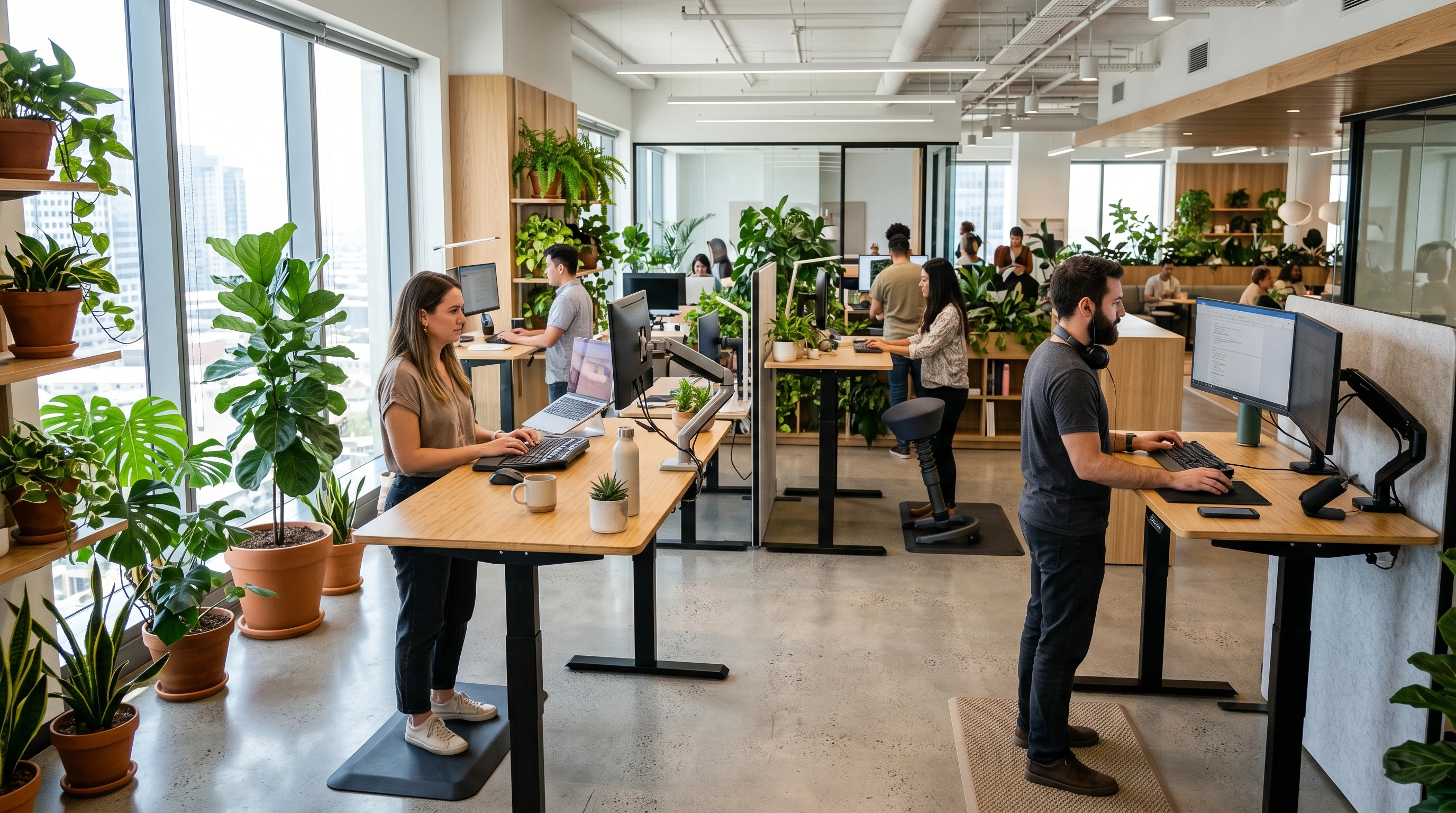
 Whether you work at home or in a company office, getting comfortable while staying productive is super important. Sitting all day can make your body feel stiff, and it might even mess with your health. That’s where standing desks come in. They let you switch up your posture, which can make your workday feel a lot better.
If you’ve noticed yourself getting restless or dealing with some aches from your old office chair, you’re definitely not alone. I felt those same things before I made the switch to a standing desk. Turns out, even a few hours of standing every day can really shake up your routine in a good way.
If you’re curious about the benefits, want to see which standing desks work best for office use, or just need some practical advice before making a change, this guide is packed with the info you need.
I’m walking through everything from how these desks actually work, to which models stand out for common office setups. You’ll also find tips for making the most of your workspace and some commonly asked questions at the end, so you’ll be ready to pick the right desk for your needs.
What is a Standing Desk?
A standing desk (sometimes called a sitstand desk or height adjustable desk) is basically a work surface that you can use while standing, sitting, or switching between the two. These desks usually come with a mechanism, like a crank, an electric motor, or a simple lever, that adjusts the height. This way, you can set your monitor, keyboard, and other stuff at a level that fits your body comfortably.
Some desks let you change height quickly with the press of a button, while others are manual and might take a little more effort. The main point is that these desks help you move more and avoid staying stuck in one position for hours at a time. Over time, switching positions can really boost your comfort and health during long workdays.
Benefits of a Standing Desk
Switching between sitting and standing throughout the day comes with a bunch of perks. Here are a few that really stood out to me after weeks of using my own standing desk:
- Less back pain: Keeping your body in one position for hours can lead to stiff muscles and soreness. Changing it up with a standing desk can help reduce those nagging aches.
- More movement: It’s easy to add little stretches, foot taps, or pacing when you’re already standing. These small moves get your blood flowing and may even boost your mood.
- Energy boost: I noticed I felt less groggy during the afternoon when I swapped in some standing time. It’s like your body wakes up more easily when you’re not glued to a chair for hours.
- Better focus: Moving around seems to break up the monotony, so it’s easier to stay alert and productive. Even a brief change in position can spark fresh ideas or help you power through tough tasks.
Of course, it’s not about standing for the whole workday. I always recommend mixing up sitting, standing, and even short walks to feel your best. Adding an anti fatigue mat or supportive shoes can also make standing more comfortable. Remember to listen to your body and switch things up as needed.
Best Standing Desks for Office Use (With Pros & Cons)
1. Uplift V2 Standing Desk
Pros:
- Electric adjustment, goes up or down with just a button press
- Sturdy and solid, even when fully raised
- Lots of desktop sizes and finishes to match your office
- Comes with built in cable management channels
Cons:
- Pricier than some basic models
- Assembly takes a little time and patience
Who it’s ideal for: Office workers who want a reliable, super adjustable desk with tons of customization. This one is especially good if you want a desk that looks professional and feels stable at any height.
2. Fully Jarvis Bamboo Standing Desk
Pros:
- Smooth electric lift and quiet motor
- Real bamboo top looks modern and gives a natural vibe
- Customizable sizing for small or large workspaces
- Upgradable with accessories like drawers and monitor arms
Cons:
- Bamboo surface can scratch a bit easier than a laminate top
- Some users say the assembly instructions could be clearer
Who it’s ideal for: Workers who spend long hours at a desk and want something ecofriendly with sturdy lifting power. If you love the look and feel of wood finishes, this one’s worth checking out.
3. Vari Electric Standing Desk
Pros:
- Comes mostly preassembled, just add the legs and go
- Simple controls with preset height options
- Strong frame with a wide range of height adjustments
- Top material is tough and easy to clean
Cons:
- Fewer color options compared to competitors
- Heavier, so it takes two people to move safely
Who it’s ideal for: Anyone new to standing desks or who wants a hassle free setup. Offices that swap equipment often or need to move things around will find this desk super convenient. If you’re not a fan of spending lots of time on assembly, you’ll really like this feature.
4. FlexiSpot E7 Pro Plus
Pros:
- Wide height range, making it a good fit for short and tall folks
- Strong steel frame keeps it stable when typing or leaning
- Quiet electric motors, no buzzing or wobbling
- Lots of space for dual monitors, laptops, or extra gear
Cons:
- Edge of the desk can be sharp if you lean on it a lot
- Fewer premium finish choices
Who it’s ideal for: Teams or individuals who want a sturdy, flexible work area that won’t rock while they work. This is a solid pick for anyone who likes to spread out or work with multiple screens. Plus, if your team has a mix of tall and shorter members, this model can handle it all.
5. Branch Standing Desk
Pros:
- Sleek design fits right in with modern office decor
- Easy clean surface feels premium
- Built in cable tray keeps cords neat
- Quiet, smooth electric adjustment that remembers your favorite heights
Cons:
- Not as many size options
- Accessories like drawers are addons (not included by default)
Who it’s ideal for: Minimalists and office workers who want a stylish, reliable standing desk. Perfect for anyone who values tidy workspaces and easy, push button operation. If you like keeping distractions to a minimum, this design-focused desk is a smart choice.
FAQ: Standing Desks for Office Use
How long should I stand each day?
Experts generally recommend starting with 30 minutes to 2 hours of standing each day. Once you get used to it, it feels more natural to switch between sitting and standing every hour or so.
If you’re new to standing desks, ease in slowly and listen to your body. Consider using reminders or apps to prompt position changes, which can help you form healthy habits over time.
Are standing desks hard to assemble?
Most standing desks require at least a little assembly, but some, like the Vari, are mostly preassembled and super easy to set up. I’ve found electric desks take a bit longer than manual ones, just because of the motor and controls, but nothing too complicated for most people.
Watching a quick video tutorial or checking the manufacturer’s website for tips can help make desk building even smoother.
Will a standing desk work with my existing office chair?
Yep, most standing desks are fully compatible with regular or ergonomic office chairs. The cool thing is you don’t have to get rid of your chair. You just swap between sitting and standing as you like, making it easy to switch for comfort throughout your day.
If you want to move even more, try pairing your setup with a leaning stool or active perch chair as well.
What should I look for in an office standing desk?
- Height range that suits your own height and workspace
- A sturdy frame that doesn’t wobble when you type or lean
- Easy adjustment, electric motors are pretty handy if you change positions a lot
- Cable management so your desk doesn’t look cluttered
- A work surface large enough for your gear (think monitors, laptop, notepads, etc.)
Other nice features include programmable height presets, rounded edges for comfort, and ecofriendly materials if you want something sustainable. Think about how you work and what features will help you stay organized and comfortable all day long.
Can standing desks really help with back pain?
Standing desks aren’t a cure all, but they can help relieve some of the soreness and stiffness from sitting all day. I found less pressure on my lower back, but moving around and stretching also helps a lot.
Everyone’s body is different, so the key is to keep mixing things up, pay attention to how you feel, and adjust your workstation until you get the right fit.
Final Thoughts
Finding the best standing desk for your office setup comes down to comfort, adjustability, and your style preferences. A well designed standing desk can help you move more, focus better, and feel less worn out at the end of the day. Taking the time to choose a desk that fits your space and work habits is really important; your back and your energy will thank you! Remember, standing desks are just one tool in the toolbox for better work health—don’t forget to stretch, move, and organize your workspace to suit you for the long haul.