
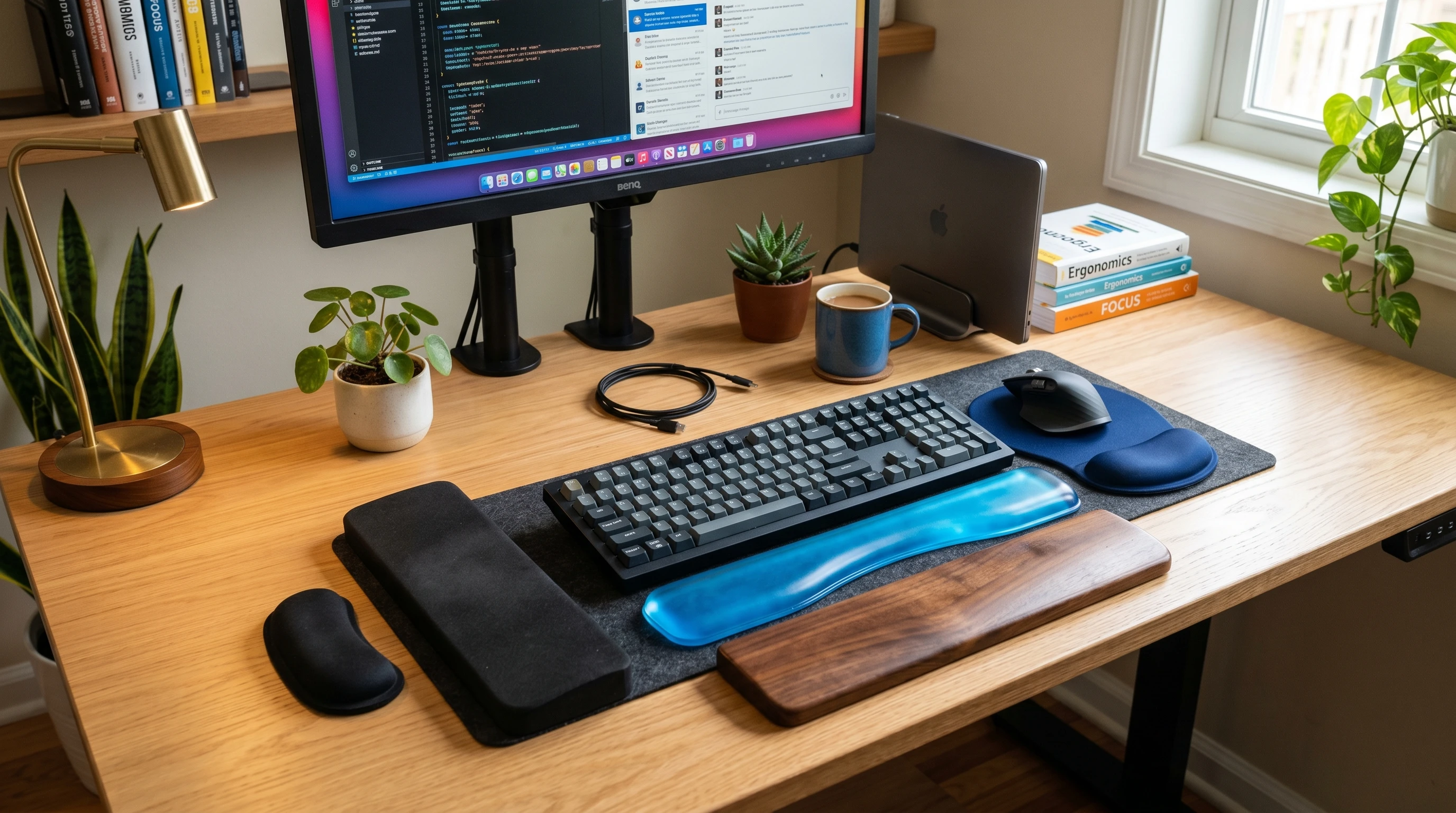
 If you spend long hours typing, your wrists deserve some TLC. Keyboard wrist rests can help with comfort, improve typing posture, and might even reduce the odds of discomfort down the road. But with so many options, picking the right one gets a little overwhelming. Not every wrist rest fits every need or keyboard, either.
Choosing the right wrist rest can actually make a real difference if you’re working or gaming all day. You might wonder if you really need a wrist rest at all, which materials make a difference, or what features are actually worth your money.
I’ve tested enough to know there’s no one size fits all answer. Here’s what I’ve found about value, comfort, support, and features across the most popular types, plus which ones I think work best.
Are Wrist Rests for Keyboards Worth It?
I get asked all the time if wrist rests are really necessary. The truth is, a good wrist rest can be pretty handy for lots of people. It gives your wrists a soft place to land, encourages a straighter wrist position, and helps take some pressure off your lower palm.
If your keyboard sits low or you already have a well set up desk, a wrist rest isn’t always required, but if you notice fatigue, numbness, or tingling, a supportive rest might be worth checking out. Some folks even use them just for the added comfort on long typing sessions.
Of course, a wrist rest isn’t a magic fix for every ergonomic problem. If your desk and chair are at the wrong height or your typing posture isn’t great, a wrist rest alone won’t solve everything.
But as a small upgrade, it can really give a boost to your comfort and overall experience.
How a Wrist Rest Improves Comfort
A well designed wrist rest gives you a place to relax your hands when you pause between typing, and it can keep your wrists from bending at awkward angles while you work.
This usually leads to less tension in your forearms and shoulders over time. It also helps reduce direct contact with hard surfaces. Goodbye sore, red marks after a long session!
For anyone who already has wrist pain or wants to prevent it, even a simple padded wrist rest goes a long way. I found that switching to a softer, contoured wrist rest helped my wrists feel way better at the end of the day. 
Adding a rest actually made my daily routine easier and my hands less tired, especially during marathon work or gaming sessions.
Another plus — a wrist rest can help with maintaining a consistent hand position, especially if your desk setup isn’t quite ergonomic. Some people find it simply adds an eye-catching style to their workspace without being too flashy.
What Kind of Wrist and Arm Support Options Are Available?
There’s more than one way to support your wrists during typing or gaming. Here are a few familiar options:
Foam Wrist Rests: Offer a soft, lightweight cushion. They’re great for folks who want gentle support that doesn’t get hot or sticky and hold up well over time.
Gel Wrist Rests: Have a squishy, springy vibe. They mold a bit to your wrist, and some people love the cooler sensation. They can get sticky or split with rough use, but are still a popular pick for people looking for something unique.
Memory Foam: These contour closer to your skin, sometimes with a cooling gel layer for the best combo. They’re plush, supportive, and bounce back nicely after use.
Hard or Wooden Wrist Rests: Wood or rigid plastic rests provide a stable, structured platform. They look classy and pair well with mechanical keyboards, but they don’t provide much cushion if you rest your wrists heavily.
Ergonomic Arm Supports: Desk mounted trays or swings that support your whole forearm. These are more common for people doing intensive computer work, such as graphic design or editing, and can really help reduce long term fatigue.
I usually recommend foam or memory foam wrist rests for most people since they deliver all day comfort and stay cool.
Gel is popular too, but it depends a lot on personal preference and how much support you like. Wooden wrist rests have a next level cool style, but not everyone likes the hardness.
Gel vs. Foam Wrist Rests: Which Is Better?
Gel wrist rests have a squishier, almost bouncy feel. They’re good for folks who like a cool-touch surface.
They feel slick and sometimes help reduce sweating, but they can deteriorate faster, especially if you rest heavy on your wrists or have rough desk habits. If you tend to move your wrists a lot, gel can sometimes slide around unless it has a good non-slip base.
Foam wrist rests, especially memory foam, have a softer feel and tend to keep their shape longer.
They feel plush and are a go-to for comfort. I found foam rests adapt better for long typing stretches and tend to ‘disappear’ under your palms. If you get hot hands, look for cooling gel infused foam pads for the best of both vibes.
Memory foam is great for anyone who likes a super soft cushion and doesn’t want to feel the desk through the pad.
Best Ergonomic Keyboard Wrist Rests (Top Picks for 2024)
Here are a few of my top picks after testing and polling fellow desk dwellers. These models have pros and cons, plus star ratings based on comfort, durability, price, and overall impression:
Kensington Duo Gel Keyboard Wrist Rest – 4.3/5 Stars
- Pros: Feels cool to the touch, easy to wipe clean, wide enough for most full size keyboards.
- Cons: Can split at the seams over time; gel may feel too firm for some.
This one is my go to gel rest. The wave pattern allows for good airflow, so sweaty wrists are less of a problem. It’s a bit on the firmer side, but great for anyone looking for dense, supportive gel. Worth checking out if you don’t want a super squishy feel.
Buy it if: You want gel, easy cleaning, and medium firm support.
HyperX Wrist Rest with Cool Gel Memory Foam – 4.6/5 Stars
- Pros: Super comfortable thanks to memory foam with a cooling gel pad, nonslip grip, perfect height for mechanical keyboards.
- Cons: A little bulky for smaller desks; cover gathers dust easily.
This one feels plush but not squishy, and the cooling layer actually works. After hours of use, my wrists aren’t sweaty. The nonslip base keeps it in place, even with twitchy gaming.
Buy it if: You want memory foam comfort plus cooling for all day typing or gaming.
Glorious PC Gaming Race Wooden Wrist Rest – 4.1/5 Stars
- Pros: Stylish and sturdy, smooth lacquered finish, perfect for raised keyboards.
- Cons: No cushion; can feel hard over time; pricier than most foam options.
This is my favorite for anyone with high profile keyboards who wants a classy desk setup. Not soft, but the wood stays cool and holds up for years. Not the best for everyone, especially if you want a soft pad to sink into.
Buy it if: You want durability and a clean, minimalist look.
Gimars Upgrade Memory Foam Keyboard Wrist Rest – 4.5/5 Stars
- Pros: Affordable, thick memory foam, fits most keyboards, includes a mouse pad wrist rest.
- Cons: Takes a while to mold to your wrist shape; fabric cover may pill.
This is the one I recommend for folks who want a no nonsense soft foam pad for daily work. The price is right and the combo pack covers your keyboard and mouse.
Buy it if: You want all day comfort without spending a lot.
Features to Look for in a Keyboard Wrist Rest
- Height: Should align with your keyboard, so you avoid a sharp angle at the wrist. This helps with comfort and alignment.
- Material: Cooling gel for sweaty hands, memory foam for plush comfort, wood for durability and style.
- Nonslip Base: Keeps the wrist rest where you want it, so it doesn’t scoot across your desk.
- Easy to Clean: Waterproof or wipeable surfaces save a lot of hassle in the long run.
- Size: Should match your keyboard type (full, TKL, compact) for better support and balance.
- Surface Texture: Smooth is good for hand movement; rough helps with grip.
It’s also smart to check for hypoallergenic materials if your skin is sensitive, and for vented or breathable styles in hotter climates or for those who run warmer naturally.
FAQ: Keyboard Wrist Rests
Q: Are wrist rests recommended by doctors?
A: While wrist rests can provide comfort, doctors suggest keeping wrists in a neutral position (not bent up or down). A wrist rest helps with that when used right, but it’s important not to press too hard; gentle resting is key.
Q: Can wrist rests prevent carpal tunnel?
A: There’s no guarantee, but taking pressure off your wrists and keeping a straight position can definitely help lower the odds, especially if your setup isn’t ideal.
Q: How do I know if I need a wrist rest?
A: If your wrists get sore, tired, or you notice tingling, a wrist rest could help. If you type all day and your hands hang in the air, try one for extra comfort. Sometimes, just trying a wrist rest for a week can help you track down the best style for you.
Q: Should my wrists rest on the pad while typing?
A: Experts say your wrists should float above the pad while you type and only use the pad to rest in between. It’s about support, not pressure.
Q: What size wrist rest should I get?
A: Match your wrist rest to your keyboard size: full, TKL, or compact, so it supports your wrists where you need it and your setup looks tidy.
Finding the right wrist rest is all about what feels right for you. The good news? There’s a wrist rest out there for every desk setup and preference. Give one a shot and see just how much more comfortable your typing sessions can get.
Whether you work from home or game late into the night, having the right support under your wrists is a small step that can make a big difference over the long haul.
Right thats it for now peeps, have a great day!